Introduction
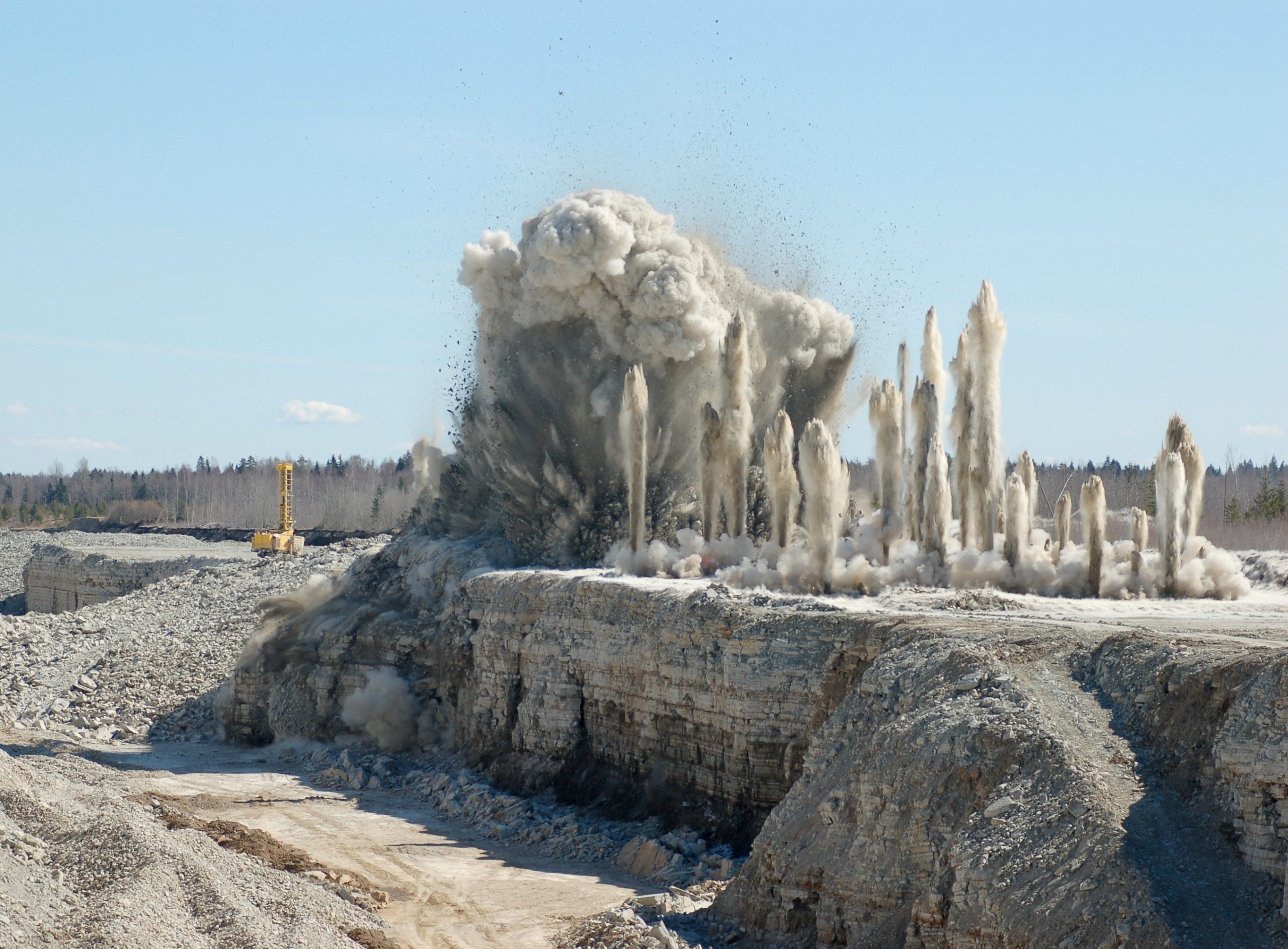
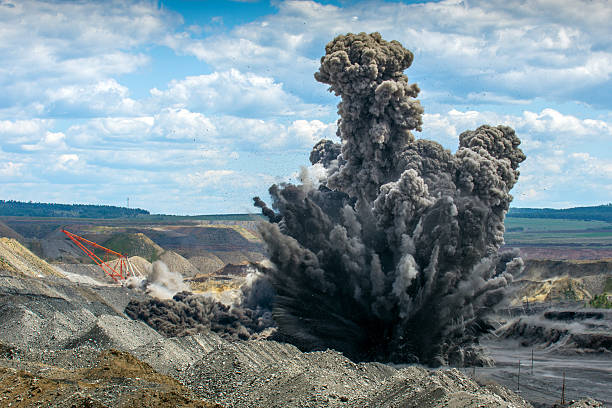
Behind the blasting activities that appear highly risky in the mining industry lies a planning process carried out with a very high level of precision. Blasting is not merely the act of detonating rocks; rather, it represents a combination of engineering science, geology, and operational planning aimed at producing optimal rock fragmentation.
This process is designed to break parent rock into smaller fragments to facilitate excavation, transportation, and further processing. The complexity of blasting activities begins with the planning of blasting zones, drilling blast holes, charging explosives, and regulating detonation timing, all of which are carefully calculated to ensure operational efficiency, occupational safety, and minimal environmental and social impacts.
In the development of modern mining practices that increasingly demand the principles of sustainable mining, blasting techniques continue to evolve to remain efficient while also being environmentally responsible.
Understanding Blasting in Mining
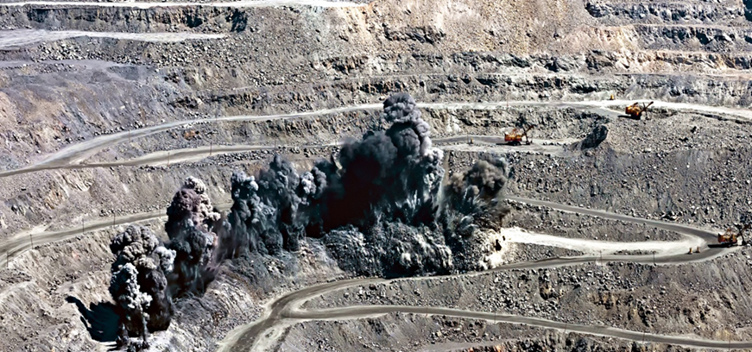
Blasting is the process of using explosives to break hard rock from its parent formation into smaller fragments. This fragmentation serves several important purposes, including:
- Facilitating excavation and material loading processes
- Improving the efficiency of transportation operations
- Supporting the extraction of minerals or coal
- Optimizing the productivity of heavy equipment
This technique is widely used as a primary method in both open-pit mining and underground mining operations.
Blasting Process and Stages
Blasting activities in mining are carried out through several systematic stages as follows:
1. Planning and Surveying the Area
The initial stage involves identifying geological conditions and rock types, determining drilling patterns, spacing between blast holes, drilling depth, and selecting appropriate explosive materials.
2. Clearing and Preparing
The blasting area is cleared of vegetation and topsoil to obtain a stable surface suitable for drilling operations.
3. Marking
Marking points are established according to the blasting design to indicate the exact drilling locations.
4. Drilling
Drilling is performed to create blast holes, which serve as spaces for placing explosive materials.
5. Priming
This stage involves installing detonators and boosters in the blast holes to initiate the detonation process.
6. Charging
The main explosives are loaded into the blast holes according to the blasting design.
7. Stemming
Blast holes are sealed using inert materials such as sand, gravel, or drill cuttings to confine the explosive energy and improve rock fragmentation efficiency.
8. Tie-Up
Detonators from each blast hole are connected using delay detonator systems to control the sequence and timing of explosions.
9. Area Security
Before blasting, safety zones must be established:
- Minimum safe distance for personnel: 500 meters from the blasting area
- Minimum safe distance for equipment: 300 meters from the blasting area
All access points to the blasting site must be secured to prevent unauthorized entry by people or vehicles.
10. Blasting
Once all safety procedures have been confirmed, the detonation process is carried out according to the planned initiation system.
11. Post-Blast
The final stage involves inspecting the blasting area to identify potential hazards such as misfires, toxic gases, and evaluating the fragmentation results.
Explosive Materials Used in Mining
Several explosive materials commonly used in mining operations include:
1. Ammonium Nitrate (NH₄NO₃)
Ammonium nitrate is the main component in ANFO (Ammonium Nitrate Fuel Oil) mixtures, widely used in open-pit mining due to its economic efficiency and high explosive power.
2. Potassium Nitrate (KNO₃)
A white crystalline oxidizer used for small to medium-scale blasting with relatively low environmental impact.
3. TNT (Trinitrotoluene)
A stable explosive capable of generating large amounts of energy through exothermic reactions. It is widely used in underground mining and heavy construction projects.
4. PETN (Pentaerythritol Tetranitrate)
A highly powerful explosive commonly used as a booster or detonating core in mining operations.
5. Sodium Nitrate (NaNO₃)
A strong oxidizer often used as an alternative to ammonium nitrate in industrial explosive mixtures.
6. Dynamite
An explosive composed of nitroglycerin, absorbent materials, and stabilizers, designed to reduce the risk associated with pure nitroglycerin.
Drilling Patterns in Mining
Open-Pit Drilling Patterns
Several drilling patterns are commonly applied in open-pit mining:
Square Pattern
The burden and spacing distances are equal, resulting in blast holes aligned directly behind those in the previous row.
Rectangular Pattern
Spacing between holes is larger than the burden, with maximum spacing typically twice the burden distance.
Staggered Pattern
Blast holes in the subsequent row are positioned between the holes of the previous row, forming a zigzag pattern that improves energy distribution.
Underground Drilling Patterns
Center Cut
Drill holes are positioned at the center to create an initial free face.
Wedge Cut
Drill holes are arranged in a V-shaped wedge pattern to create an initial opening.
Burn Cut
Parallel drill holes allow deeper drilling and are effective for hard rock formations.
Drag Cut
Drill holes are angled in a fan-like pattern with the wedge located at the floor or wall of the opening.
Blasting Patterns in Mining Operations
Blasting patterns are designed to control rock fragmentation, direct rock movement, and optimize the efficiency of blasting operations. The design of blasting patterns varies depending on whether the mining activity is conducted in open-pit mining or underground mining.
1. Open-Pit Blasting Patterns
Several blasting patterns are commonly applied in open-pit mining operations to achieve effective rock breakage and controlled rock displacement.
1.1 Corner Blasting with Staggered Pattern and Echelon Initiation (90° Fracture Orientation)
This blasting configuration uses a staggered drilling pattern combined with an echelon initiation system.
Characteristics:
- The fracture orientation between cracks is approximately 90°.
- Fractures between blast holes are also oriented at 90°.
Objectives:
- To create an efficient rock fracture plane.
- To minimize remaining rock fragments at the corner of the blasting area.
1.2 Corner Blasting with Staggered Pattern and Echelon Initiation (60° Fracture Orientation)
In this configuration, blast holes are arranged at specific intervals and detonated sequentially.
Characteristics:
- Fracture orientation between cracks is approximately 60°.
- Blast holes are arranged with predetermined spacing.
- Detonation progresses from the front row to the back row.
Objectives:
- To control the direction of rock displacement.
- To improve rock fragmentation.
- To maintain operational efficiency and safety.
1.3 Inter-Row Corner Blasting with Square Pattern and Echelon Initiation
This method combines a square drilling pattern with an echelon blasting sequence.
Characteristics:
- Blast holes are arranged based on:
- Burden distance (B)
- Hole spacing = 1.15 × B
- Holes are arranged both horizontally and vertically.
- Blasting is conducted sequentially in an echelon pattern:
- From the lower-right corner toward the upper-left corner.
Objective:
- To direct the rock movement toward the free face in a controlled manner.
1.4 Inter-Row Corner Blasting with Staggered Pattern
This blasting method uses a staggered arrangement of blast holes between rows.
Characteristics:
- Blast holes are arranged in a zigzag pattern between rows.
- Detonation occurs row by row in sequence.
- Blasting begins from the front row.
This configuration helps improve fragmentation efficiency and control rock displacement.
1.5 Long Free Face Blasting with Square V-Cut Pattern and Close-Interval Delay
In this method, blast holes are arranged symmetrically in a V-shaped configuration.
Characteristics:
- Blast holes form a symmetrical V pattern.
- Detonation starts from the center and progresses outward and backward.
- The sequence continues until approximately row eight.
- The design creates a central free face.
- Rock fragments may be displaced in two directions.
Advantages:
- Improves blasting efficiency.
- Reduces ground vibration due to the close-interval delay system.
1.6 Long Free Face Blasting with Rectangular V-Cut Pattern and Free Delay Timing
This pattern is similar to the previous V-cut configuration but uses a rectangular arrangement.
Characteristics:
- Blast holes are arranged symmetrically in a widening V shape toward the back.
- Blasting begins from the center rows (row 1 and row 2).
- Detonation then progresses laterally and backward following the delay sequence.
- The pattern creates a double free face.
Benefits:
- Directs rock displacement toward both sides.
- Improves rock fragmentation.
- Reduces excessive blasting pressure in a single direction.
2. Underground Blasting Patterns
Blasting patterns in underground mining are designed primarily to create an initial free face that allows the rock mass to break and move efficiently during excavation.
2.1 Burn Cut
Burn cut blasting uses several central blast holes to create an initial void.
Characteristics:
- Several burn holes are drilled at the center of the blasting area.
- Burn holes may be:
- Unloaded (without explosives), or
- Filled with low-density explosives.
- These holes are surrounded by charged blast holes.
Function:
- To create an initial free space at the center of the blast.
- This allows surrounding rock to break toward the created void.
2.2 Wedge Cut
Wedge cut blasting forms a wedge-shaped opening to initiate rock breakage.
Characteristics:
- Blast holes are arranged in a V-shaped configuration.
- The design creates a triangular wedge-shaped free face.
Function:
- To create the initial free face required for effective rock fragmentation.
- To initiate the rock breakage process during excavation.
2.3 Drag Cut
Drag cut blasting uses angled parallel holes to direct rock movement.
Characteristics:
- Drill holes are inclined and arranged parallel to each other.
- Holes are directed toward one side of the working face.
Function:
- To create a free face.
- To produce a “dragging effect” that moves rock fragments toward the open excavation area.
Environmental and Social Impacts
Environmental Impacts
Blasting activities can generate several environmental impacts, including:
Ground Vibration
Seismic waves transmitted through rock and soil due to explosive energy.
Flyrock
Rock fragments that are ejected into the air as a result of blasting energy.
Fumes
Toxic gases such as NOx, CO, and NH₃ produced from incomplete explosive combustion.
Air Blast
Shock waves in the air that produce loud explosive noise.
Social Impacts
Blasting operations may also create social impacts such as:
- Public complaints due to explosion noise
- Perceived vibrations in residential areas
- Reduced sense of safety and comfort among nearby communities
Hazard Control Measures
Several mitigation measures are implemented to minimize blasting risks:
1. Proper Blasting Planning
Designing drilling and blasting patterns based on geological and geotechnical conditions.
2. Explosive Management
Explosives must be stored in licensed magazines and handled by certified personnel.
3. Use of Personal Protective Equipment (PPE)
All workers must wear appropriate PPE according to safety standards.
4. Flyrock and Misfire Control
Proper stemming techniques and post-blast inspections are carried out to prevent hazards.
5. Vibration and Noise Monitoring
Using instruments such as seismographs and sound level meters to ensure blasting impacts remain within permissible limits.
6. Community Communication
Mining companies conduct regular socialization and communication with nearby communities regarding blasting schedules and safety procedures.
Blasting Regulations in Indonesia
Blasting activities in Indonesia are regulated by several legal frameworks, including:
- Keputusan Direktur Jenderal Mineral dan Batubara No. 309.K/30/DJB/2018
Technical guidelines for explosive safety and blasting operations. - SNI 7571:2023
National standard regulating vibration limits caused by blasting in open-pit mining. - Keputusan Menteri ESDM No. 1827 K/30/MEM/2018
Guidelines for the implementation of Good Mining Practice. - Undang-Undang No. 4 Tahun 2009
Regulates government authority in managing mining activities.
Conclusion
Blasting is one of the most essential methods in mining operations, enabling efficient and effective rock fragmentation. The process involves complex technical planning, from drilling and explosive charging to detonation timing.
However, blasting also carries potential environmental and social impacts. Therefore, the implementation of strict safety standards, environmental impact control, and regulatory compliance is essential to ensure that blasting operations are conducted safely, efficiently, and responsibly.
References
Adimitra Baratama Nusantara. (n.d.). Bahan kimia peledakan terbaik untuk industri pertambangan. Adimitra.co.id.
https://adimitra.co.id/blog/bahan-kimia-peledakan-terbaik-untuk-industri-pertambangan/
AlvinDocs. (n.d.). Blasting tambang. AlvinDocs.
https://www.alvindocs.com/blog/blasting-tambang
Identec Solutions. (2023, April 13). Blasting safety in daily mining operations.
https://www.identecsolutions.com
Inspektur Tambang. (n.d.). K3 dan KO pada bahan peledak. Inspektur.id.
https://www.inspektur.id/kaidah-teknik/k3-dan-ko/6-ko-handak
Kementerian Energi dan Sumber Daya Mineral Republik Indonesia. (2018). Keputusan Direktur Jenderal Mineral dan Batubara Nomor 309.K/30/DJB/2018 tentang Petunjuk Teknis Keselamatan Bahan Peledak dan Peledakan.
Kementerian Energi dan Sumber Daya Mineral Republik Indonesia. (2018). Keputusan Menteri Energi dan Sumber Daya Mineral Nomor 1827 K/30/MEM/2018 tentang Pedoman Pelaksanaan Kaidah Teknik Pertambangan yang Baik.
MRIA Indonesia. (2024, 17 Oktober). Tahapan pekerjaan blasting. MRIA.co.id.
https://mria.co.id/2024/10/17/tahapan-pekerjaan-blasting/
Putra Adventure. (2014, Maret). Tahap peledakan. Putra Adventure Blogspot.
https://putraadventure.blogspot.com/2014/03/tahap-peledakan.html
Redaksi Teknominerba. (n.d.). 3 efek peledakan tambang yang wajib kamu ketahui. Teknominerba.com.
https://teknominerba.com/3-efek-peledakan-tambang-yang-wajib-kamu-ketahui/
UNESCO. (n.d.). Teknik peledakan versi 3.0 [PDF]. Press Poliban.
https://press.poliban.ac.id/uploads/file/Teknik_Peledakan_v_3.0_Unesco.pdf
Undang-Undang Republik Indonesia Nomor 4 Tahun 2009 tentang Pertambangan Mineral dan Batubara.
Yunus, M. (2021). Analisis efektivitas kegiatan peledakan terhadap fragmentasi batuan di PT. XYZ. Jurnal Matriks: Teknik Sipil dan Perencanaan, 21(1), 29–38.
https://journal.umga.ac.id/index.php/matriks/article/view/382/334